
Sauna San Diego: Built Around the Human Body, Not Just Temperature
Most saunas are designed around a thermostat. Our public sauna was designed around respiration. In Finland there is a word, löyly — the living wave of heat and steam that defines a true sauna experience.
Great löyly is not simply high temperature. It is heat that feels breathable, even, and sustainable round after round. Modern measurement now explains why.
What Heat Does to the Body: Understanding the True Sauna Benefits
Inside a properly hot sauna, the body enters thermoregulation:
The sensation feels passive, but physiologically the body is working continuously to maintain stability. Because breathing rate rises, the quality of the air becomes part of the thermal load.
Why Air Matters More Than Temperature
In an occupied hot room, carbon dioxide rises quickly.
Independent indoor-air research consistently shows that higher CO₂ / low-ventilation environments correlate with measurable declines in cognitive clarity and comfort. In practical terms: people often leave a sauna not because it is too hot — but because the air feels heavy.
This distinction guided our design.
Our Design Target: Breathable Heat
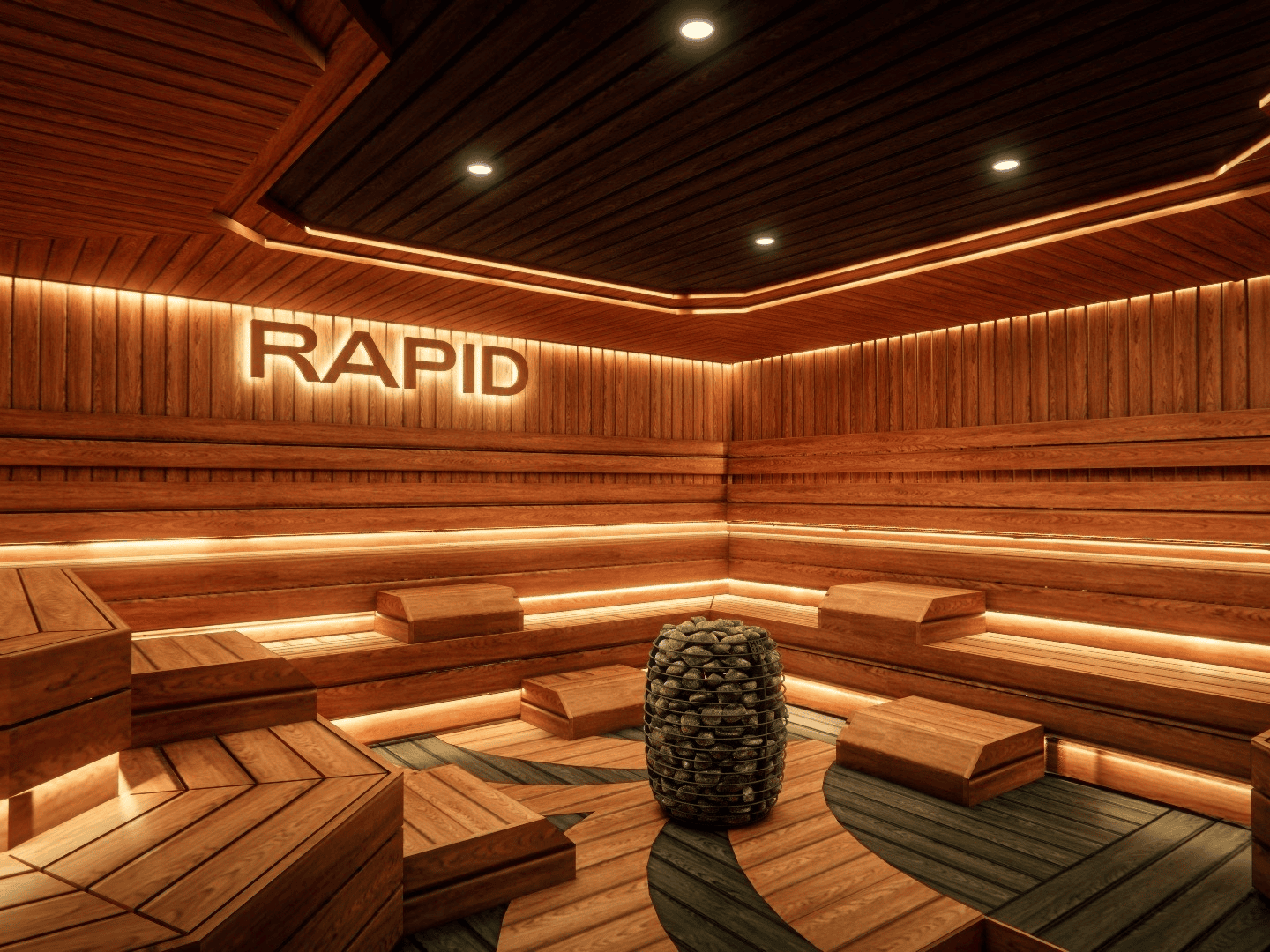
Instead of sealing the room and relying on insulation alone, the sauna was engineered to operate with continuous air exchange during use. During normal occupancy the environment is maintained at: < 1000 ppm CO₂ measured at head height on the upper bench This is important because stratification inside hot rooms can make lower measurements misleading — what matters is what bathers actually breathe. Maintaining breathable air while sustaining authentic sauna temperatures required designing the heating system and airflow together as a single system.
Why the Heater Is So Large
Moving air removes heat.

Even Heat Instead of Hot Ceiling / Cold Floor
Many saunas create a vertical temperature gradient where the head overheats before the body is fully warmed. We tuned our air movement and heater placement to distribute heat evenly across seating levels, creating a balanced thermal exposure. Because this design prevents localized overheating, you might wonder how often should you use a sauna to see the best results? We generally recommend 2–4 sessions per week for optimal health.
Material Stability Under Extreme Cycling
Traditional cedar performs well, but repeated heating and cooling cycles stress any wood.
We selected thermally modified sauna-grade wood specifically for high-temperature environments because the process improves dimensional stability and resistance to moisture-related movement.
The goal is a cleaner interior that behaves consistently over years of heat cycling.


Lighting Designed for Recovery
Sauna is both physical and neurological.
Bright, blue-heavy lighting promotes alertness — the opposite of what most people want during recovery heat exposure, especially when paired with cold plunge therapy.
The sauna uses high-temperature fiber-optic lighting so illumination can remain calm and indirect while keeping electrical components outside the extreme environment.
Built for Performance, Not Just Appearance
Every element — airflow, heating capacity, material choice, and lighting — was selected so the environment works as a system.
The objective was simple: a hot room you can stay in because the air, heat, and body all agree. That is what defines a true sauna.